Lorbrulgrud
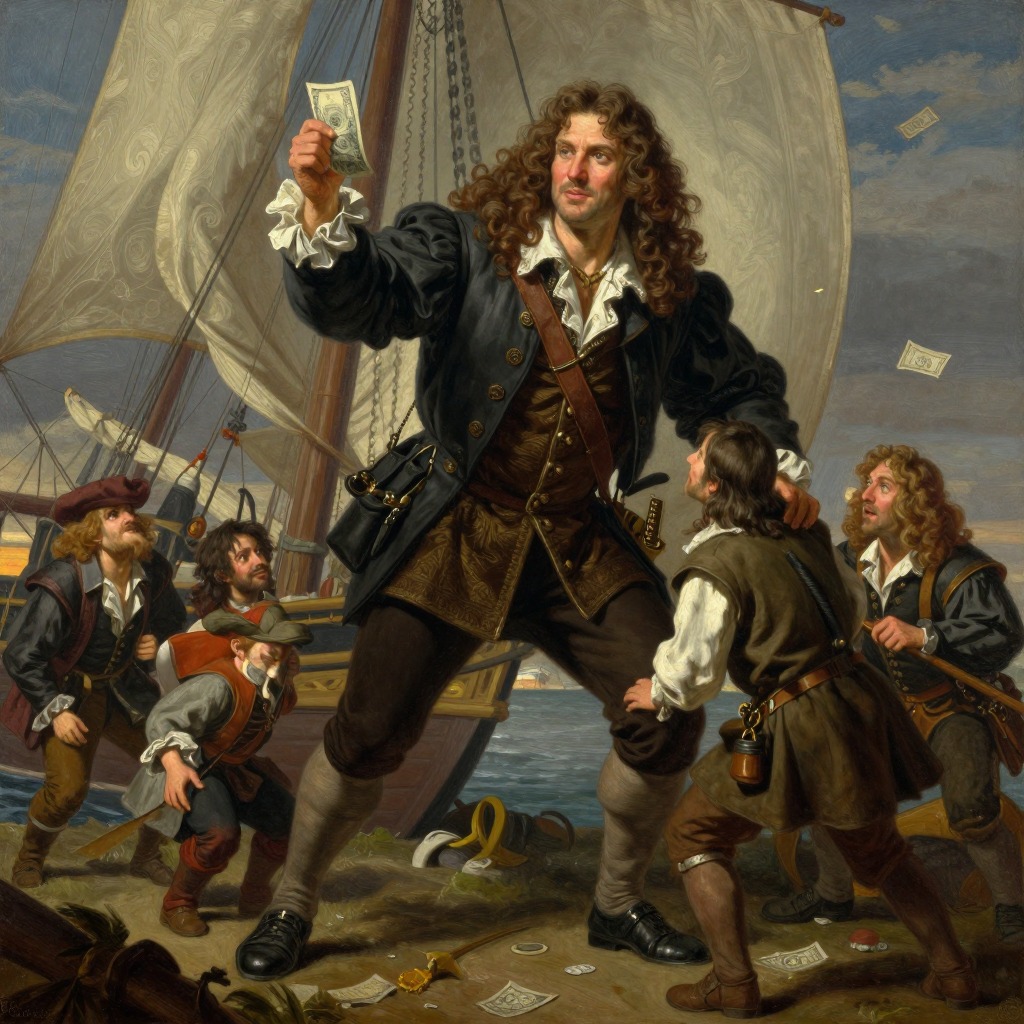
Lorbrulgrud, meaning "Pride of the Universe," is the sprawling capital city of the kingdom of Brobdingnag. It is the primary setting for the second half of Gulliver's second voyage, a place where his diminutive stature is thrown into stark relief against the colossal architecture, animals, and inhabitants. The city is not merely a backdrop but an active agent in Gulliver's ordeal, a landscape of overwhelming scale that constantly reinforces his powerlessness and the relativity of human perception.
Scale and Layout
Lorbrulgrud is a city of staggering dimensions. It contains over eighty thousand houses and approximately six hundred thousand inhabitants. Gulliver measured the city himself using the royal map, which was laid on the ground for him and extended a hundred feet; he paced its diameter and circumference several times barefoot. By his calculation, the city is three glomglungs in length, which he equates to about fifty-four English miles, and two and a half in breadth. The king's palace is not a single regular edifice but a heap of buildings about seven miles round, with chief rooms generally two hundred and forty feet high. The coach allowed to Glumdalclitch and Gulliver was about the square of Westminster Hall, though not quite so high. The chief temple, which Gulliver visited, has a tower not above three thousand feet high, a height he found disappointing compared to Salisbury steeple, though he conceded its walls are nearly a hundred feet thick, built of hewn stone with each stone about forty feet square.
Life at Court
Within Lorbrulgrud, Gulliver's life is centered on the royal court. The Queen of Brobdingnag became so fond of his company that she could not dine without him; a table was placed for him at her left elbow, with a chair to sit on, while Glumdalclitch stood on a stool on the floor near his table to assist him. He had an entire set of silver dishes and plates, proportionally no bigger than those in a London toy-shop, which his little nurse kept in a silver box in her pocket. The queen herself would craunch the wing of a lark, bones and all, between her teeth, though it was nine times as large as a full-grown turkey, and she drank out of a golden cup above a hogshead at a draught. The king, queen, and the royal issue of both sexes dined together every Wednesday, and at these times Gulliver's little chair and table were placed at the king's left hand, before one of the salt-cellars. The king took pleasure in conversing with Gulliver, inquiring into the manners, religion, laws, government, and learning of Europe, and made very wise reflections and observations upon all he said.
Dangers and Domestic Life
The city's scale made everyday life perilous for Gulliver. The queen's dwarf, who was not full thirty feet high, became insolent at seeing a creature so much beneath him, and once dropped Gulliver into a large silver bowl of cream; Glumdalclitch ran to his relief and took him out after he had swallowed above a quart of cream. The dwarf was soundly whipped and forced to drink up the bowl of cream, and was never restored to favor, being soon bestowed on a lady of high quality. The kingdom was much pestered with flies in summer, each as big as a Dunstable lark, which would alight upon his victuals or fix upon his nose or forehead and sting him to the quick. The greatest danger Gulliver ever underwent in that kingdom was from a monkey belonging to one of the clerks of the kitchen. Glumdalclitch had locked him in her closet, and the monkey, entering through an open window, seized him, took him out in his right fore-foot, and held him like a nurse does a child, carrying him up to a roof where he was rescued by a footman. The monkey was killed, and an order made that no such animal should be kept about the palace.
Narrative Significance
Lorbrulgrud functions as the ultimate expression of Brobdingnag's physical and moral enormity. It is the stage for Gulliver's most profound humiliations and his most intimate encounters with the Brobdingnagian court. The city's vastness is not merely a matter of geography but a constant philosophical challenge, forcing Gulliver to confront his own insignificance and the relativity of human standards. It is from this city that he is carried by an eagle, beginning his escape, and it is to the memory of its monstrous proportions that he compares everything upon his return to England, finding himself unable to look in a glass without despising his own littleness.